10 Garage Organizing Tricks That Actually Keep Your Car Off the Street
A cluttered garage swallows your tools, blocks your car, and steals your peace of mind. Garage organization transforms that chaos into a system of custom shelving, labeled bins, and wall-mounted racks that put every item in its logical place. The payoff is instant access to everything you need, reclaiming both your space and your sanity. With a deliberate layout, you can finally use your garage for its true purpose: storage, projects, and parking.
What Does an Organized Garage Actually Look Like?

An organized garage looks like a functional, empty floor. Every item has a designated, accessible home, usually on wall-mounted slatwall or a robust overhead rack system. You see clear zones: gardening tools hang to the left, sporting equipment nests in a vertical caddy on the right, and automotive supplies are sealed in a transparent, labeled bin on a high shelf. There are no piles; the car fits and you can walk from bumper to door without stepping over a single box.
The true sign is that you can find any tool in under thirty seconds.
The walls are occupied, not the floor, and the space breathes with deliberate white space between systems.
Defining Zones for Parking, Workbenches, and Storage

An organized garage hinges on distinct functional zones for parking, workbenches, and storage. The parking zone must be a clear, unobstructed path, defined by floor tape or wheel stops, leaving no room for drifting clutter. The workbench zone claims its own territory against a wall, with tools and projects confined to pegboards and magnetic strips above the surface. Storage zones, using wall-mounted shelving and ceiling racks, stand apart, never encroaching on the car’s path. A rolling cabinet can serve as a movable boundary, shuttling between work and storage as tasks demand. Each zone respects its border, creating a garage where every function has its rightful place.
How to Visually Map Your Space Before Buying Anything
Before purchasing any bins or shelves, visually mapping your garage walls and floor prevents costly mistakes. Start by sketching the garage layout, noting all obstructions like water heaters, windows, and vehicles. Mark the ceiling height for overhead storage potential. Use painter’s tape on the concrete to outline where cabinets and workbenches will sit, testing that car doors open fully. For a precise count, follow this sequence:
- Measure each wall’s length and height.
- Identify high-traffic zones and permanent fixtures.
- Photograph the space and draw a grid overlay to proportionally place storage zones.
This spatial audit reveals dead corners or awkward alcoves, ensuring every purchase fits logically without guesswork.
The Core Systems That Keep Clutter Off the Floor
The core systems that keep clutter off the floor in a garage rely on vertical storage and zoning. Wall-mounted shelving and overhead ceiling racks create dedicated, elevated homes for bins and seasonal gear. Slatwall panels with hooks and heavy-duty pegboards keep tools, garden hoses, and extension cords suspended and visible. Cabinetry with closed doors hides small items and chemicals, preventing them from being set down. A modular floor tile system with raised edges can contain minor spills, but the true strategy is installing cleats or magnetic strips for every loose item that typically lands on the concrete. This approach eliminates horizontal surfaces where clutter accumulates, forcing a strict “off the floor” policy.
Slatwall vs. Pegboard: Which Holds Up Heavier Gear?
For heavy-duty garage gear storage, slatwall decisively outperforms pegboard. Slatwall’s aluminum or thick composite panels, anchored directly into studs, support loaded shelves, tool hooks, and bike racks holding 50–100 pounds per linear foot. Standard pegboard, with its thin fiberboard and wire hooks, struggles beyond 10–20 pounds per point and frequently buckles under the weight of power tools or heavy spools. For dense storage of miter saws, air compressors, or stacked bins, slatwall provides the rigid, adjustable foundation that keeps clutter off the floor without sagging or cracking under continuous load.
Overhead Racks That Maximize Dead Ceiling Space
Overhead racks that maximize dead ceiling space transform unused vertical area above vehicles into prime storage for bulky, off-season items like bins, tires, and long tools. By mounting directly to ceiling joists, these racks keep clutter completely off the floor without consuming wall space. Adjustable-height models allow clearance for garage doors and tall vehicles. Installation requires locating joists and using lag bolts rated for the rack’s weight capacity. Consider loading limits: most residential racks support 250–600 pounds when properly secured. Choose fixed or pulley-lift systems based on accessibility needs.
Overhead racks that maximize dead ceiling space reclaim unused vertical air for heavy-duty, floor-free storage by mounting securely to structural joists.
Modular Cabinets That Hide Mess While Storing Bulk Items

Modular cabinets that hide mess while storing bulk items use full-extension drawers and deep shelves behind solid doors to keep large containers, camping gear, or pet supplies out of sight. Unlike open shelving, these units prevent visual chaos by concealing overflow stock and irregularly shaped items behind a uniform facade. Integrated dividers and adjustable interiors allow you to organize bulk purchases without sacrificing access. Durable, floor-mounted bases elevate the cabinets to avoid moisture damage, while heavy-duty slides support dense loads like toolkits or bags of concrete.
- Full-extension drawers reveal all contents without deep reaching
- Reinforced steel frames handle up to 500 pounds per cabinet section
- Locking doors secure chemical or hazardous bulk items safely
How to Set Up a Storage System You’ll Actually Maintain
To build a garage storage system you’ll actually maintain, start by grouping items into zones—gardening, tools, sports—and assign each a dedicated, labeled home. Use open shelving for daily-use gear and lockable cabinets for hazardous chemicals. Install modular pegboards for vertical tool storage to keep countertops clear and visible. The key to sustained order is forcing a quick reset ritual: when you finish a project, spend five minutes returning every item to its designated zone. Resist the urge to over-categorize, as overly complex systems invite abandonment. Choose heavy-duty, clear bins over opaque boxes, so you never waste time guessing what’s inside. Finally, leave open floor space near the door for large, seasonal items like lawn mowers or sleds.
Grouping Items by Frequency of Use (Daily vs. Seasonal)
Grouping items by frequency of use is foundational to a maintainable garage system. Place daily-use tools, like your vehicle snow brush or gardening gloves, on open shelves or hooks near the man-door for instant access. Store seasonal items, such as holiday decorations or winter tires, in lidded bins on high racks or in back corners to minimize visual clutter. This spatial hierarchy prevents frustration from digging through off-season gear. A key practice to sustain this is labeling zones with usage tags—clear visual cues that return items to their correct spot after each use, preserving the system long-term.
- Assign the front-most zone to items accessed at least once per week (e.g., tool belt, pet leash).
- Consign seasonal items to deep storage blocks, like ceiling rafters or wall-mounted overhead racks.
- Use transparent bins for daily gear and opaque, clearly labeled totes for seasonal backups to avoid guesswork.
Labeling Tactics That Prevent the “Where Did I Put That?” Problem
To kill the “Where did I put that?” hunt, ditch vague labels like “Misc.” and use specific, searchable labeling tactics. First, label both the box and its shelf location with matching numbers or QR codes, so you can scan a master list on your phone. Next, apply color-coded tape strips to categorize by zone—red for automotive, blue for garden, yellow for tools. Finally, use a label maker for permanent, bold text on the front of every bin, not the lid, ensuring you see the contents the second you glance at the shelf, not after lifting the top.
- Assign a unique number to each bin and its shelf position.
- Affix color-coded tape strips grouping items by activity (e.g., camping, hardware).
- Print durable, large-font labels on the bin’s front face only.
Creating a Return-to-Spot Habit for Every Tool and Box
Creating a return-to-spot habit for every tool and box requires designing the system around logical closure. Label each drawer or hook with a silkscreened or printed outline, so the missing tool creates visual dissonance. Follow a three-step sequence:
- Dedicate five seconds after each use to return the item; do not set it down temporarily.
- Enforce a “one-touch rule”: once a tool leaves its spot, it must return before retrieving another.
- Audit the bench monthly, correcting any orphaned tools immediately to reinforce the pattern.
This conditional loop—missing tool triggers retrieval action—prevents clutter from accumulating, because the habit relies on environmental cues rather than memory.
Choosing the Right Shelving and Bins for Your Specific Gear
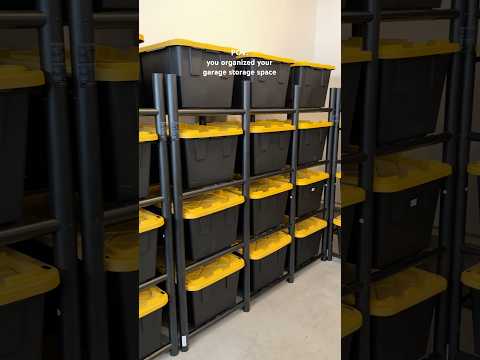
For heavy gear like power tools or car jacks, select steel shelving rated for 500+ pounds per shelf. Reserve wire shelving for lightweight items like spray cans or rags, where airflow prevents rust. Match bin size to gear frequency: clear, lidded bins for seasonal items you rarely touch, and open-front bins for tools you grab daily. For small parts (screws, bits), use modular compartment organizers that snap onto your shelf rails. Quick Q&A: How do I store long-handled gear like shovels? Install a separate wall bracket or a slim, purpose-built vertical rack; don’t cram them onto general-use shelving where they block access. Finally, label every bin with its primary content and a photo for instant identification.
Heavy-Duty Steel Shelving for Power Tools and Car Supplies
For power tools and car supplies, heavy-duty steel shelving is a non-negotiable upgrade. Standard wire racks will buckle under a stack of batteries, oil jugs, or a floor jack. You want shelves rated for at least 1,000 pounds per unit, with welded crossbars to prevent sagging. Pair them with deep, heavy-gauge steel bins for small parts like nuts and bolts, and use the lower shelves for bulky items like drill cases or gallon-sized chemical jugs. This setup keeps your gear off the concrete floor, protecting it from moisture and impact.
- Choose shelves with a minimum 14-gauge steel thickness for long-term durability under heavy loads.
- Opt for shelves with a raised lip on the edge to prevent tool cases from sliding off.
- Use plastic or metal divided bins on www.orgaspaces.com the top shelves to organize sockets, wrenches, and small car hardware.
Clear Plastic Bins vs. Stackable Totes for Visibility
For immediate visual confirmation of contents, clear plastic bins are unmatched, allowing you to spot camping gear or holiday decorations without opening a lid. Stackable totes, while often opaque, sacrifice this instant gear identification for superior vertical stacking stability when loaded with heavy tools. In a busy garage, clear bins prevent the frustration of digging through a pile of totes to find one specific item, saving time during a project. Opt for clear bins for frequently accessed items and reserve stackable totes for seldom-used, uniform-heavy gear that can be labeled on the end.
Vertical Bike Hooks and Ladder Racks for Odd-Shaped Items
Vertical bike hooks transform ceiling or wall space into storage for cycles, while ladder racks leverage inclined surfaces for surfboards, kayaks, or skis. The key is matching the hook’s weight rating to your bike’s mass—a standard hook holds 30–50 pounds, but carbon frames need padded grips. Ladder racks with adjustable cradles secure odd shapes without pressure points; mount them on studs for a 75-pound capacity. For unstable items like snowboards, add foam padding to the rack’s crossbars to prevent shifting. Q: Can ladder racks hold multiple odd-shaped items simultaneously? Yes, but space them evenly—if overloading, use separate racks for heavy kayaks versus lightweight skis to avoid structural stress.
Common Garage Organization Mistakes That Waste Time and Money
A common mistake is buying storage solutions before taking inventory, leading to wasted cash on bins that don’t fit your tools or shelving that is too shallow. Over-packing shelves to the point of collapse creates a dangerous mess that costs time to restack. Failing to group items by frequency of use forces you to dig through holiday decorations to find a hammer daily. Another error is ignoring vertical space, leaving walls bare while floor area fills with clutter. Using mismatched, non-uniform containers multiplies inefficiency, as they cannot stack neatly, wasting overhead volume and making it impossible to see contents without pulling everything down.
Why Buying More Bins Before Decluttering Backfires
Buying bins before decluttering backfires because you simply organize your chaos rather than solving it. You end up with labeled containers full of things you never use, wasting both money and garage space. Pre-bin downsizing is essential; without it, you pay to store junk behind a clean facade. The Q&A is clear: Does buying bins first create more work? Yes, because you then have to unpack and re-sort everything after finally purging, doubling your effort.
The Overlooked Benefit of a Dedicated Wall for Sports Equipment
A dedicated wall for sports equipment eliminates the daily friction of untangling jump ropes or hunting for the other basketball. By consolidating all gear in one vertical zone, you stop wasting minutes searching across cluttered floor space and repetitive bending. This single system prevents forgotten items from weather damage or being crushed under boxes. A vertical sports wall drastically cuts morning chaos by making each piece instantly visible and accessible. Q: Why does a dedicated sports wall save money? A: It prevents repurchasing lost or damaged gear, like a buried yoga mat or rusted weights, directly reducing replacement costs over time.
How to Avoid Buried Items in Deep Corner Shelving Units
To avoid buried items in deep corner shelving units, stop stacking identical boxes where visibility is zero. Instead, install pull-out corner drawers or lazy Susans on each shelf, ensuring every stored tool or container slides forward for instant access. Group infrequently used seasonal gear on the deepest tiers, but label each bin on three sides with bold, high-contrast text. Never cram the corner so full that the back row becomes invisible; maintain a one-item depth rule on each shelf. This simple shift from static stacking to movable access eliminates the expensive cycle of re-buying lost items.